Math Practice Platform for Families
Sumzo is a cross-platform math quiz ecosystem I designed and built for
homeschooling parents and their kids (ages 9–13). It pairs native mobile apps
with a web-based parent dashboard, giving families a tool — not a game — for
daily math practice with real visibility into progress.




The Problem
Homeschooling parents need structured math practice for their kids but most apps
are either too gamified (distracting from learning) or too rigid (no
customization). Parents also want to see what their children are struggling with
— not just a final score — and be able to adjust difficulty remotely without
touching the child’s device.
What I Built
Native Mobile Apps (iOS + Android)
Kids interact exclusively through the mobile apps. Each quiz session is
generated algorithmically based on parent-configured settings:
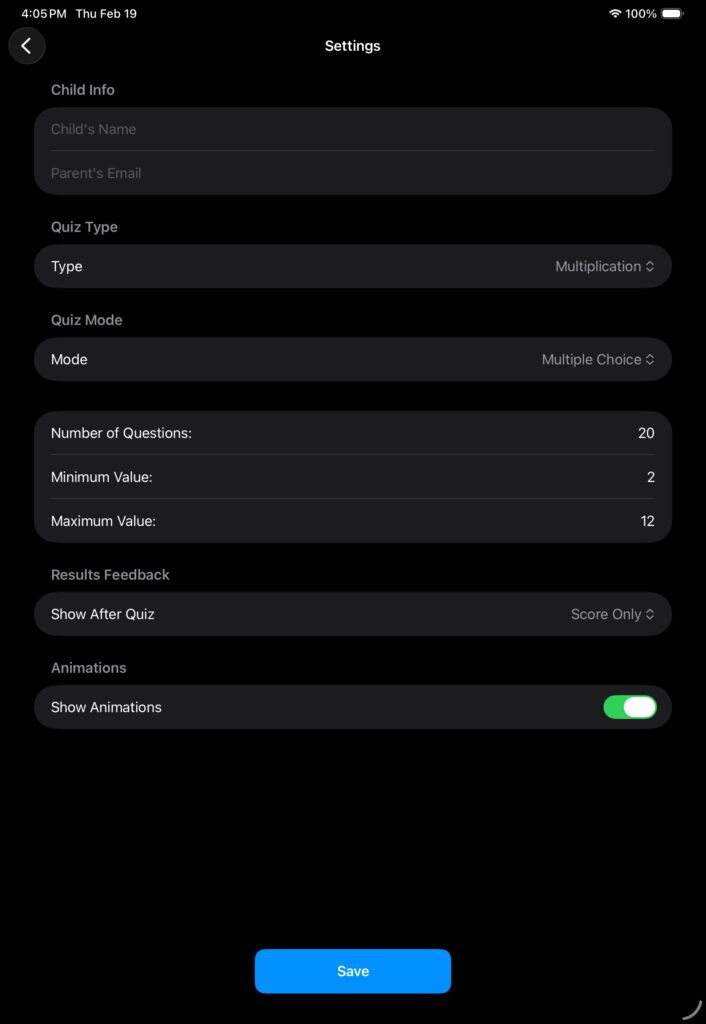
- 6 quiz types: multiplication, division, addition, subtraction, square roots,
exponents - 4 modes: multiple choice (timed/untimed) and number entry (timed/untimed)
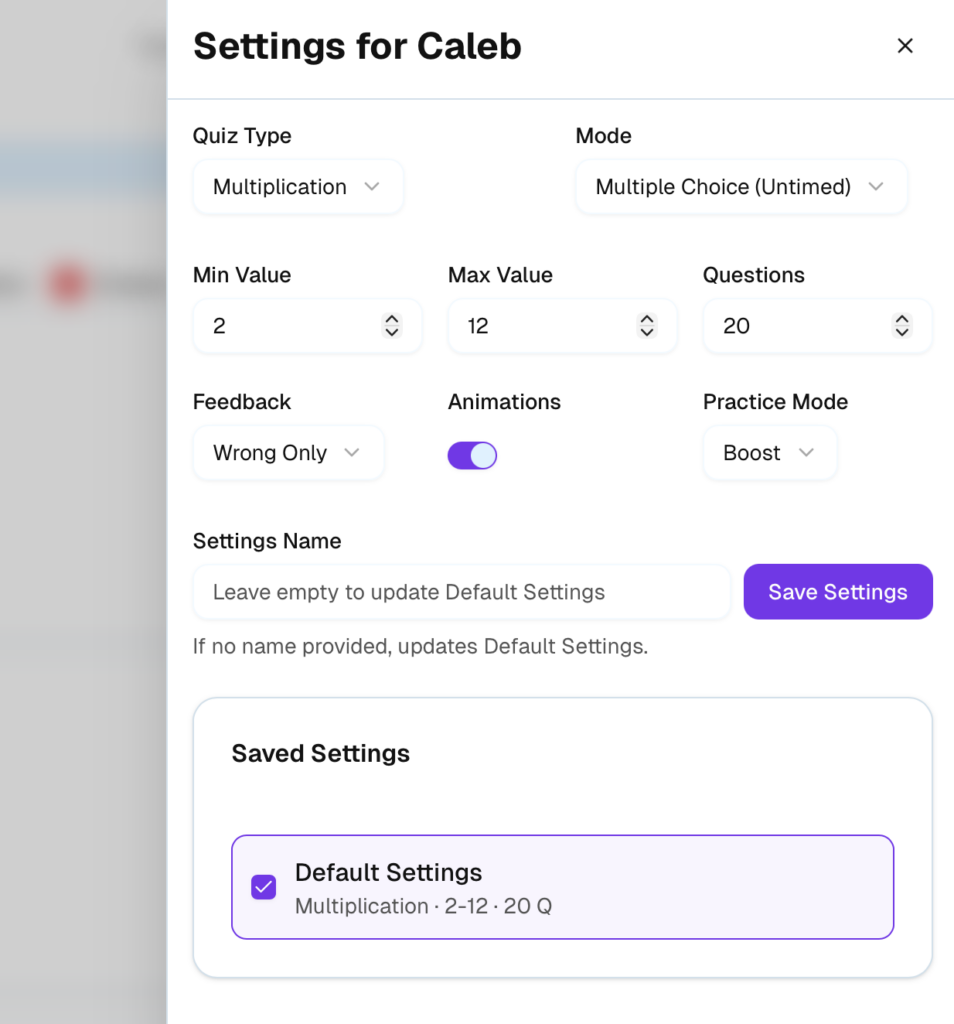
- Configurable difficulty: factor ranges, question counts, and timer duration
- Anti-guessing intelligence: distractors include answers with the same
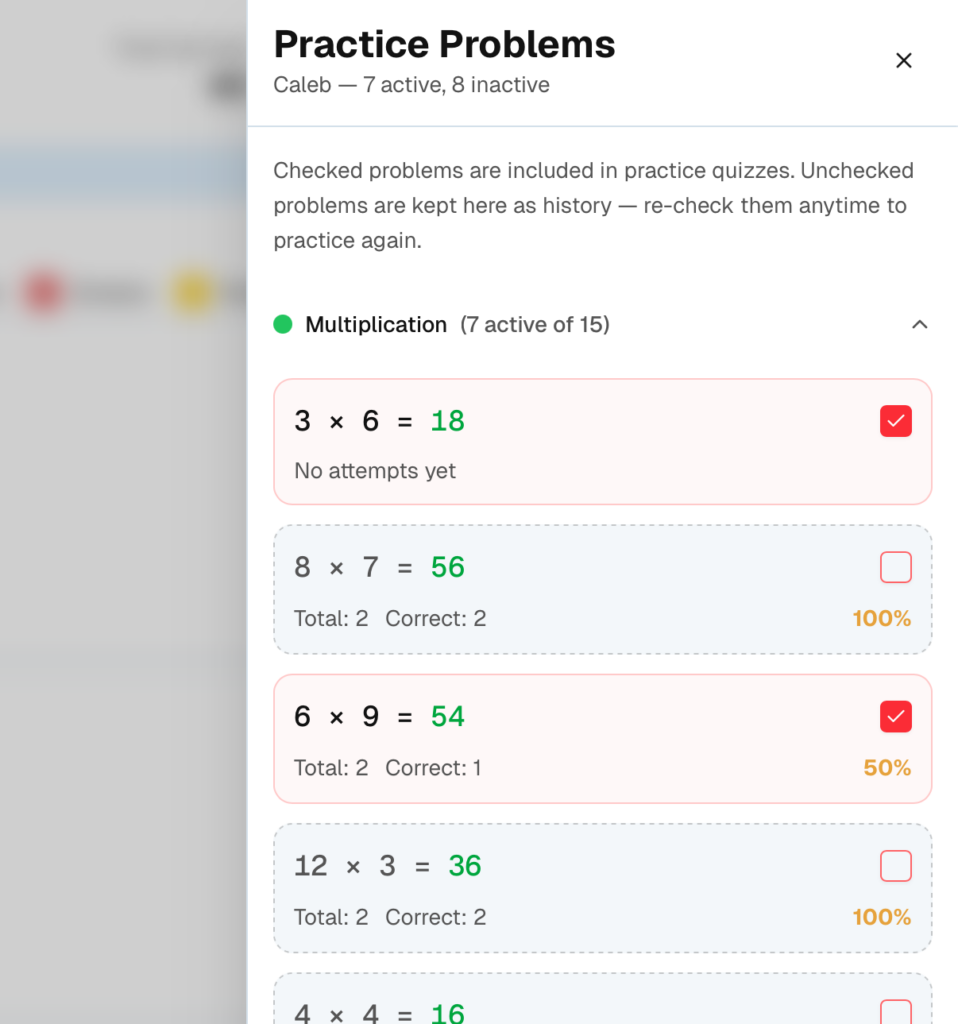
ones-digit as the correct answer, preventing the common shortcut kids use - Practice problem integration: parents assign specific problems their child got
wrong, which get mixed back into future quizzes automatically (Boost mode
sprinkles them in; Replacement mode drills only those problems) - Offline-first architecture: quizzes work without connectivity. Sessions queue
locally in a FIFO disk-based queue (capped at 500) and upload automatically when
the device reconnects and the family’s subscription is active The iOS app is built with SwiftUI and the Android app with Kotlin + Jetpack
Compose. Both share identical quiz engines and API contracts but are fully
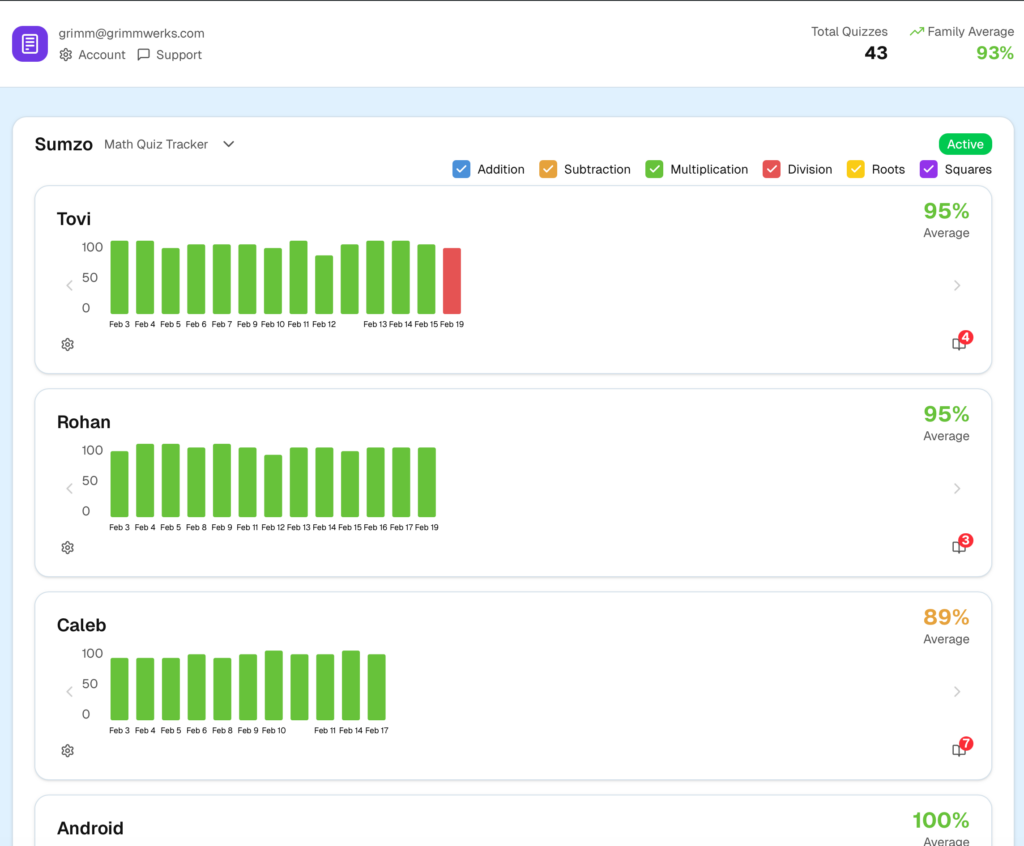
native — no cross-platform framework. Parent Dashboard (Web) Parents manage everything from a responsive web dashboard at homeschoolgame.com
— no app install required on their end: - Per-child settings control: adjust quiz type, difficulty range, mode, and
feedback level — changes sync to the child’s device on next launch - Session history with drill-down: every quiz session logged with per-problem
breakdowns — what was asked, what the child answered, whether it was correct,
and response time in milliseconds - Practice problem management: flag specific problems the child needs to work
on, track attempt history and success rates over time, deactivate mastered
problems - Multi-child support: register multiple children from a single parent account,
each with independent settings and progress tracking. On the device, children
select themselves from a picker before starting — no login required - Subscription management: Stripe-integrated billing with trial periods,
entitlement gating, and a customer portal Backend & Infrastructure. - Idempotent session uploads: duplicate detection prevents double-counting if a
device retries an upload - Entitlement-gated sync: the offline queue only flushes when the family has an
active subscription, but quizzes always work locally regardless of subscription
status - Settings sync with conflict resolution: timestamp-based comparison ensures the
most recent settings win, whether changed from the dashboard or synced from a
previous device state - Passwordless auth for parents: magic link email flow via Resend — parents
click a link to access their dashboard, with optional password setup - Zero-auth for kids: children never log in. Device registration links a child
to their parent account, and all subsequent API calls use parent/child ID pairs Technical Stack
Design Philosophy
Sumzo is deliberately a tool, not a game. The UI is clean and focused — a dark
starfield background, large readable text, and minimal distractions. Confetti
animations on correct answers can be toggled off by the parent. The goal is
repetition and confidence-building, not engagement metrics.